
Faculty Spotlight

Alex Hernandez
Interview Transcript
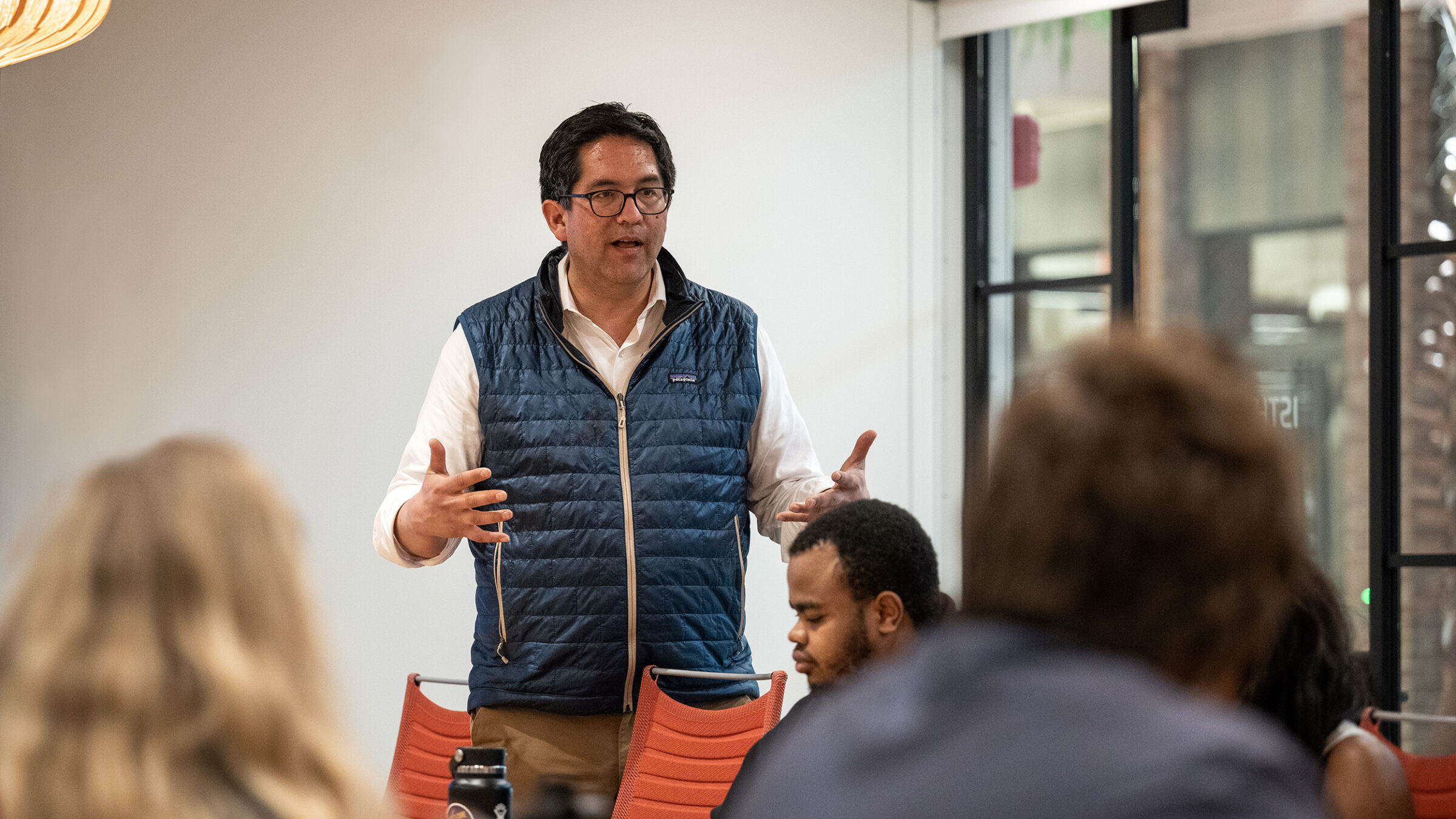
Interviewer: Parker Banas
In your opinion, what is the point of the competencies at Champlain?
The competencies represent the human skills that set you apart in life. Technical skills are essential, but the magic happens when we develop the human skills to impact our professions, bring our ideas to life or make a difference in our communities. When we originally created the competencies, we looked closely at what led to success when students entered the workforce, and that is how the competencies came to life.
How do you hope students will view the competencies throughout their time?
The competencies shape how we show up in the world. People notice that Champlain graduates communicate well, they are collaborative, they can look at a problem through different lenses, and they are thoughtful about how to include people to achieve shared goals. T. So many employers tell me that Champlain graduates are different because they have developed these competencies.
What are some ways you have integrated the competencies into roles you have held previously, and in your current role as president?
As you know, I teach entrepreneurship, so I think a great deal about how the competencies fit into that field. Integration is central — when you are an entrepreneur, you are taking information from many different sources to solve big problems for people.
Collaboration is also huge. Solving big problems requires groups of people working together effectively. Founding teams in the startup world collaborate, build diverse teams, form cultures where people can achieve both individually and together. And Inquiry — when you are solving new problems, asking the right question can be more important than having the right answer.
The competencies are embedded in entrepreneurship in so many ways that it feels as though every class touches on a different facet of them. In my own professional experience more broadly, every significant challenge I have faced has involved some combination of working with, influencing, and collaborating with others — figuring out how to approach a problem, experimenting, and iterating. Whether or not we use the same terminology, these core skills are what help you navigate the world.
In your entrepreneurship course, what learning activities and objectives do you use to get students thinking within a competencies framework?
The overarching goal of the course is for students to develop and pitch a new business idea to the outside world. Every one of the competencies, I would argue, feeds into that final project. Over the course of the semester, students progressively work to integrate these skills. They also engage with guest speakers, each of whom speaks to one or more aspects of the competencies — often multiple at once. These skills are so central to entrepreneurship that they surface repeatedly, and the more students are able to embrace them, the more successful they will be — not only in their final project, but in the learning they carry out into the world.
How have students responded to this approach? What characteristics do you see in students who go on to find success with their entrepreneurship ideas?
No one wakes up having mastered the competencies. They are learned through ongoing practice, repetition, and repeated opportunity. What the course aims to do is provide those opportunities consistently throughout the semester, so that students leave further ahead than where they entered — while understanding that each of these competencies is a lifelong journey. The hope is that students come to appreciate the role the competencies play in entrepreneurship, and why they are worth developing and refining over a lifetime.
How are Champlain’s competencies different from similar frameworks at other institutions, and how does Champlain implement them differently?
Champlain College is unique in that not every institution identifies and names the human skills that will set graduates apart in the world. Champlain has placed the competencies at the center of its programs and at the heart of its educational philosophy. Different institutions emphasize different aspects of student development, but what has inspired me about Champlain is that we openly value and celebrate these human skills as a defining feature of what a good education looks like.
What roles did you hold before coming to Champlain, and what drew you to this institution?
When I first got to know Champlain, I remember meeting a leader who told me, “I have nine hundred employees, three hundred of them are Champlain graduates — and they are my best people.” I have repeatedly heard some version of that story. Throughout my career, I have been focused on how education can be used to prepare people for opportunity. Here was a college that was doing exactly that — creating meaningful opportunities for a large number of students, and doing so as a central part of its mission. That is what inspired my curiosity and my passion for Champlain. Every organization I have been part of has been oriented around creating opportunity for others, and this felt like a remarkable chance to serve an institution I genuinely believed in.